In the heart of central Anatolia, the ancient herding civilization of Phrygia thrived, holding sway in Asia Minor from the 12th to 7th centuries BC. Their language had common aspects with both ancient Greek and ancient Armenian. Their famous historical figures included Gordias (whose knot one day would be cut by Alexander the Great), and his son, Midas (c. 700 BC), who, legend has it, turned whatever he touched into gold. Midas was overthrown by the Cimmerian invasion, which brought an end to Phrygian rule in Anatolia.
King Midas’s gold may have been only mythical, but Phrygia created and exported (through its influence on Greek and other civilizations) something lasting and precious: the ancient musical modes, including the Phrygian mode (which consists of a scale that can be played on the white keys of the piano, starting with an E). Not just the Phrygian mode, but the entire system of music passed on to us by the Greeks, on which Western music is based, was a Phrygian invention.
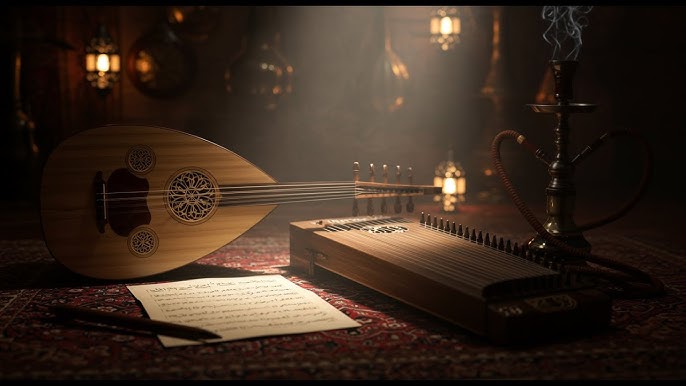
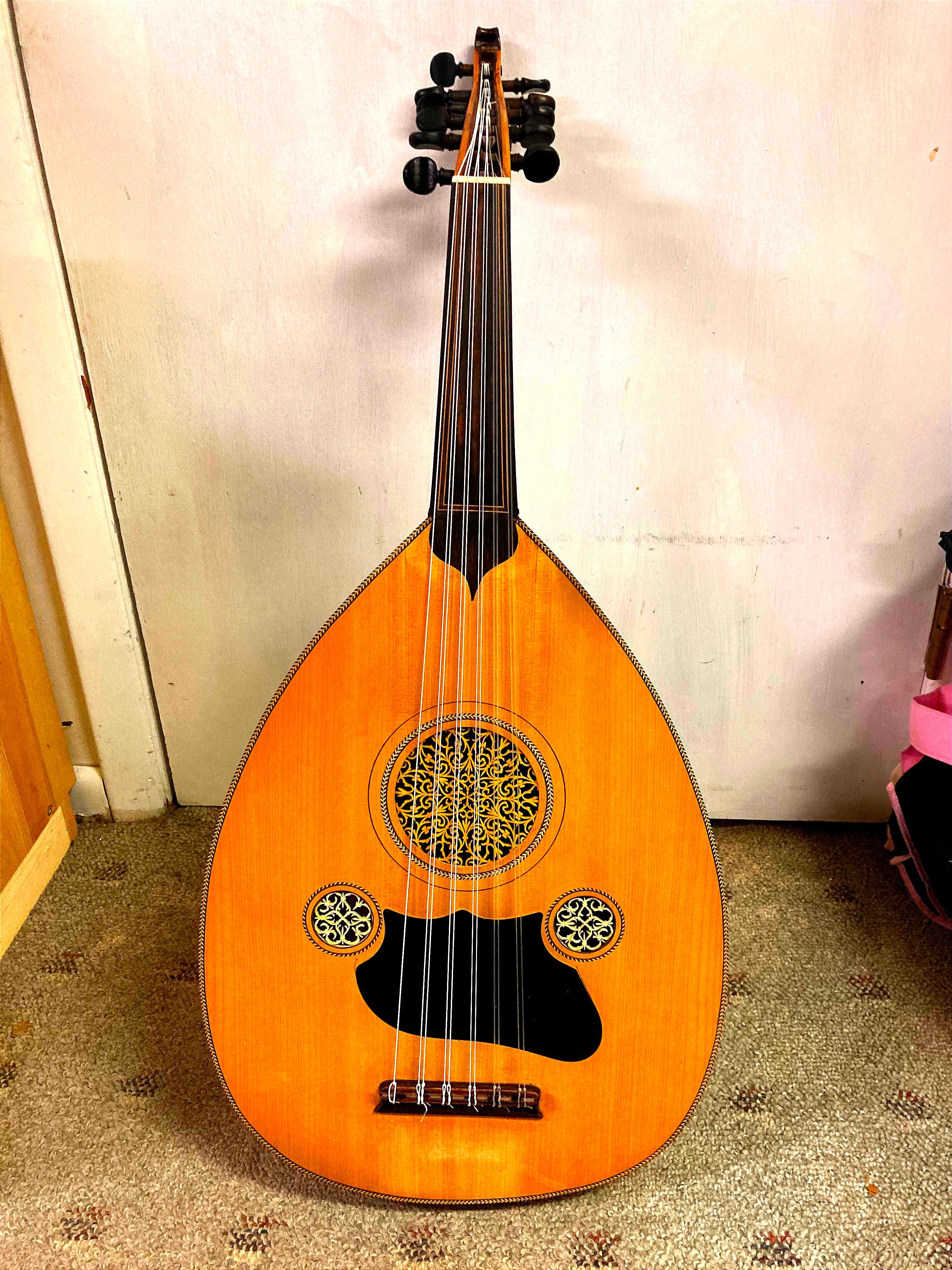
I imagine early harps and lyres, flutes and lutes, tuned to produce the seven ancient modes, carried on ships that traversed the Aegean Sea and beyond, wielded by skillful players who spread delight to the occupants of ports in Greek Evvia, Phoenician Carthage, and what is now Italian Ischia (originally Greek Pithekousai) – the manufacturing hub and gateway to mineral-rich Etruria, which supplied much of the ancient world’s tin and copper during the Bronze Age, and much of its iron during the Iron Age. The ancient furnaces of Etruria still can be seen in the mountains of Umbria and Tuscany, connected by rivers that carried ingots on flatbed boats to the sea, where they were transferred to cargo ships.
Despite the limited seafaring technology of the time (sails only assisted oarsmen to travel downwind), slow-moving cargo ships connected the whole Mediterranean basin, and beyond, to form an integrated economy. Cargo ships hugged the shores as much as possible, often zig-zagging as they struggled upwind – not easily dissuaded by the long distance, like the Argonaut heroes who journeyed on their monoreme ship from Jason’s home in Thessaly all the way to the Black Sea coastal city of Colchis, in Georgia, to find the Golden Fleece.
Gold and silver flowed to Etruria to pay for tin, copper, and iron, making the Etruscans extraordinarily wealthy. Olive oil, wine, barley and wheat – all essentials of this ancient Mediterranean world – also were loaded into huge earthenware vases on the ships that traversed the sea.
But the most important cargo carried by the ships were the people themselves, who connected with and learned from each other. The Evvians shared their version of the Greek alphabet that would later be adopted by Rome, the Spartans taught their hoplite war tactics (which the Romans would improve upon when constructing their legions), and the Athenians brought the Code of Solon (the basis for Rome’s Twelve Tables). The sea was a relatively easy way to connect distant people. In some coastal cities, hundreds of languages and dialects might be spoken.
And perhaps the most precious cargo of all were the musical ideas that people spread throughout the cultures of the Mediterranean, providing a common language. This was, I would say, the true Phrygian gold. And these interactions have continued for three thousand years connecting people up to the present day.
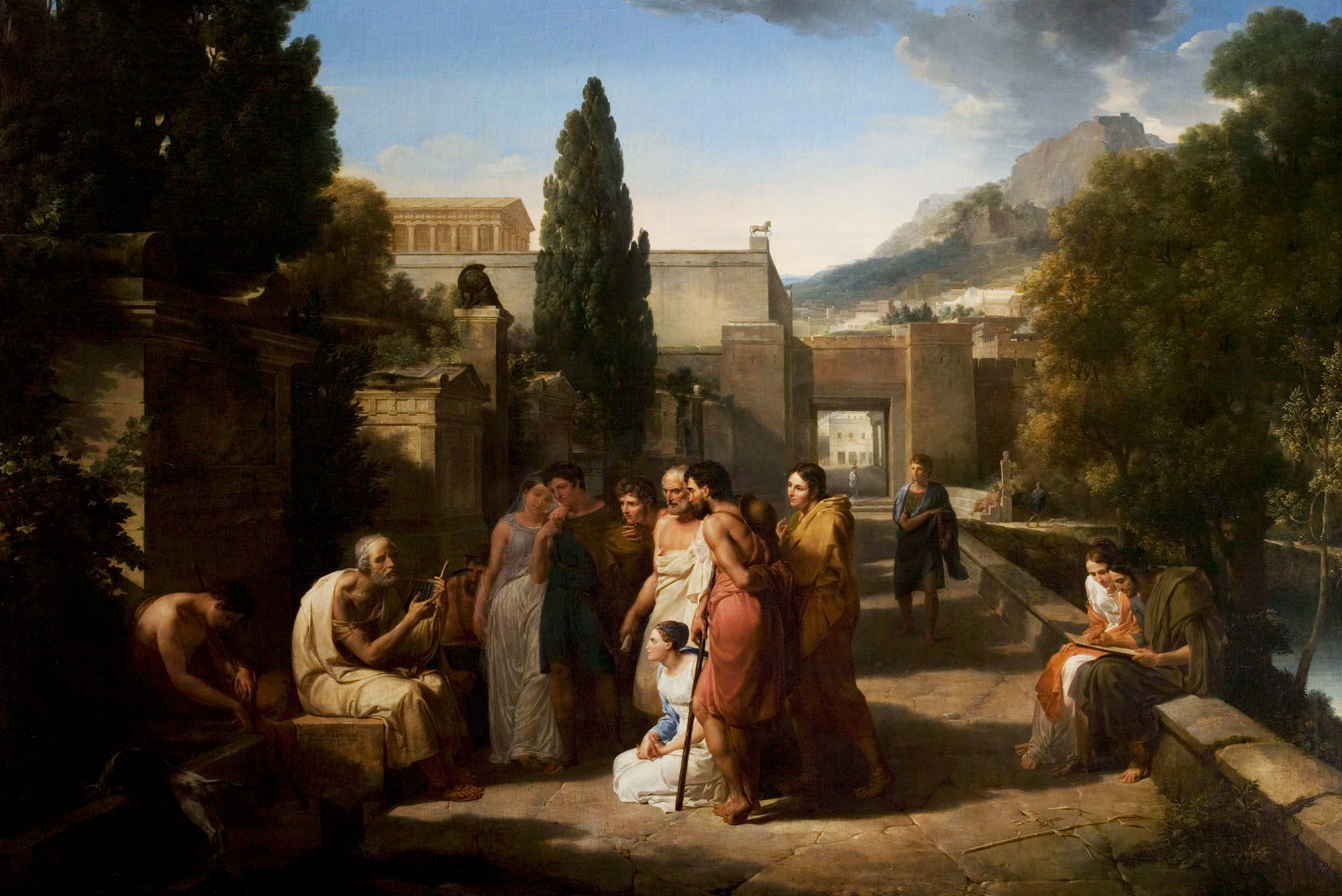
The most influential early Phrygian gold-bearer was Homer, who lived in the 8th and 7th century BC. The events recounted in his Iliad and Odyssey took place in the 12th century BC, so these were already distant historical events to his listeners – more distant in time to them than the American Revolution is to us. How did an itinerant poet manage to captivate the entire Greek world by recounting events that were centuries old, leaving a permanent mark on Greek Civilization, and later on the entire Western poetic tradition? How did his poetry, likely never written down during his lifetime, live on as an oral tradition for perhaps hundreds of years before it was written down?
The answer, in a word, is music. In saying that, I don’t mean to detract from the poetry’s brilliance and beauty. But it is hard to imagine how Homer could have attracted so much attention without musical accompaniment. Music turns a reading into an irresistible event that draws a crowd. And how could performers have remembered so many lines of poetry without the helpful mnemonic device of melody to assist them. I’d guess that musical themes (perhaps even leitmotifs) likely were used to create audience recognition of meaningful repetitions, breathing life into the oft-used formulaic phrases such as “swift-footed Achilles” … “rosey-fingered dawn” … “wine-dark sea.”
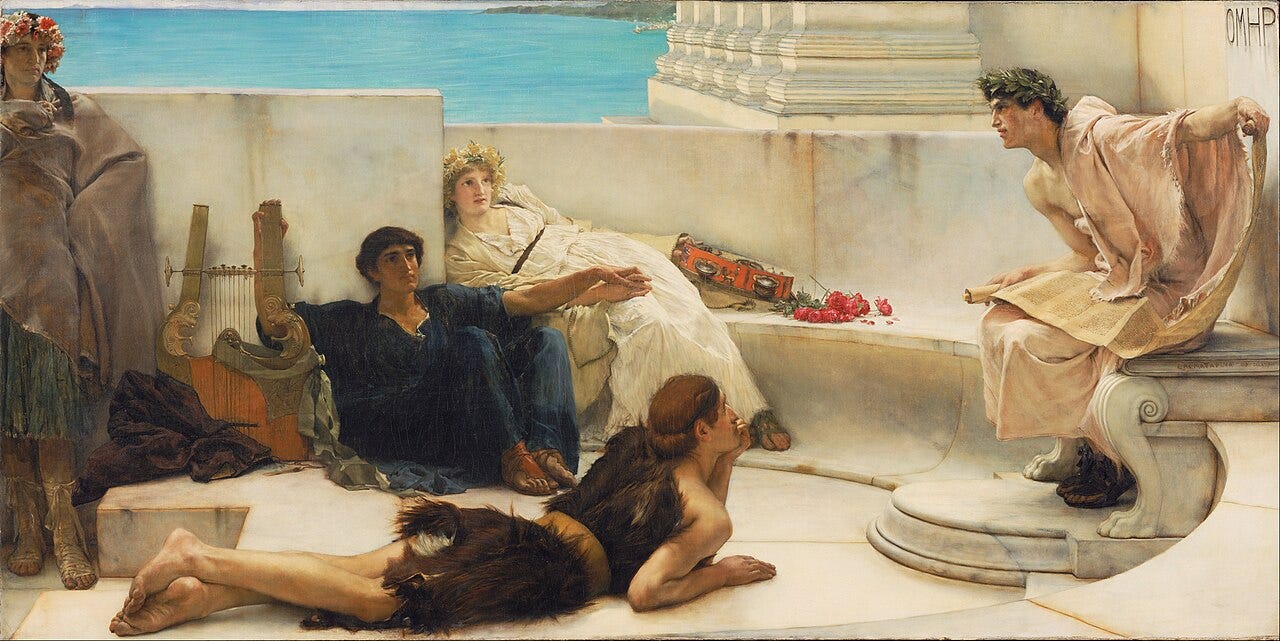
And I will argue (with no hard facts available either to contradict or support my thesis) that Homer’s identity as an itinerant musician helps to explain the subject matter he chose for his two great works. After all, there is something unusual about the stories depicted in the Iliad and the Odyssey: most stories featured by Greek writers were about intra-family conflict: Oedipus unknowingly kills his father and marries his mother; Agamemnon sacrifices his daughter, Iphigenia, and after he is murdered by his wife’s lover, he is avenged by his son, Orestes; Medea kills her own sons when their father, Jason, spurns her for another woman; Aegeus, king of Athens, jumps to his death (thereby naming the Aegean Sea) because of the carelessness of his son, Theseus, who forgets to use a white sail when returning from his battle with the minotaur.
All those stories, and many more, are based upon dramatic events within nuclear families. In contrast, the Iliad is about a war that breaks out when a Trojan prince (Paris) absconds with the wife (Helen) of a Greek king (Menelaos), and the Odyssey is about one Greek king’s adventures after the Trojan War, his ultimate return home, and the comeuppance he brings (with his son, Telemachus’ assistance) to the suitors who have invaded his palace in his absence.
What connection am I imagining between the stories Homer recounts and his own life as an itinerant musician? First, note that ancient Greek art often drew connections between the historical event the art was referencing and the present moment in which the art was experienced, sometimes with a lesson in mind, and often with an ironic twist.
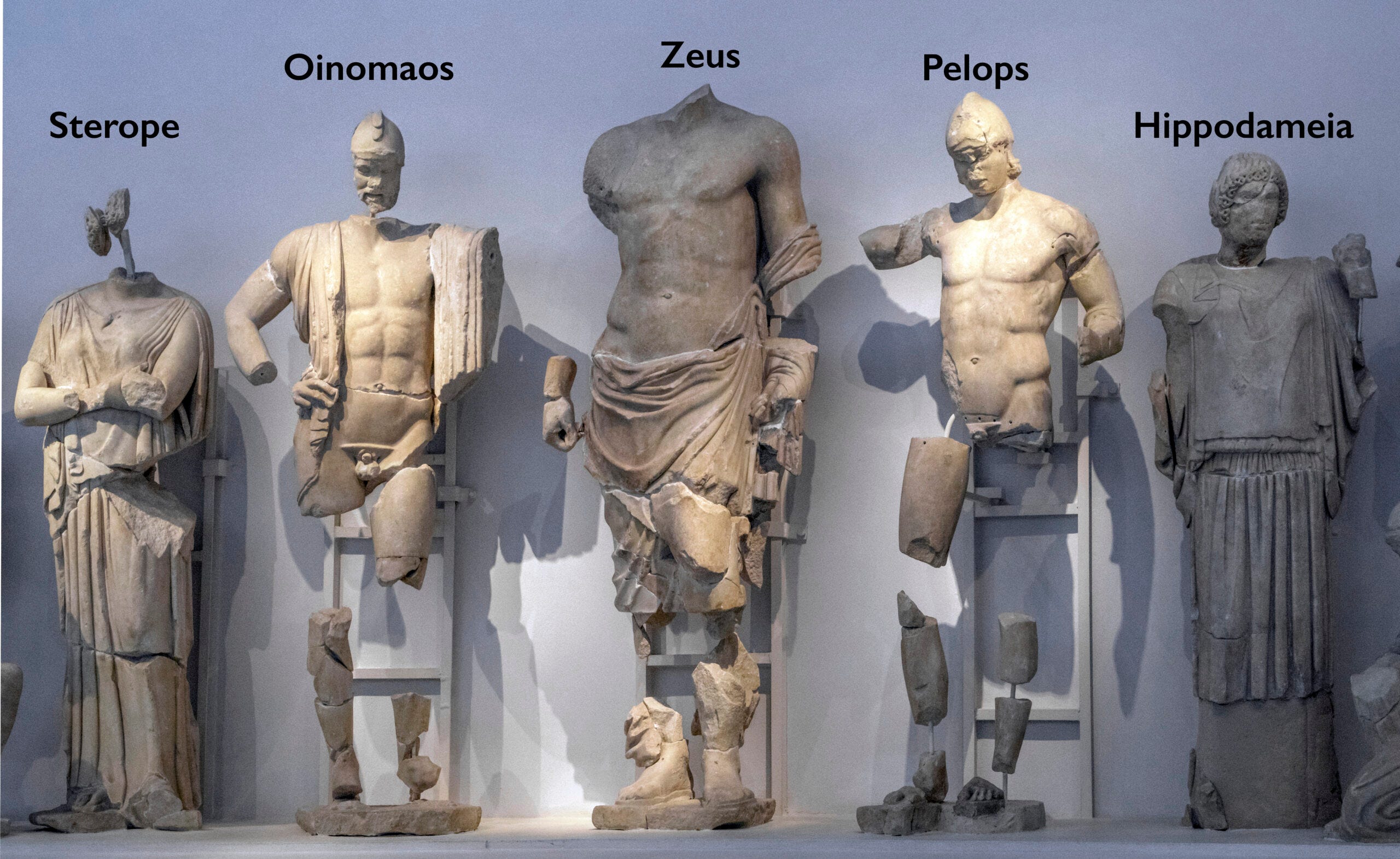
Consider the Eastern pediment of the Temple of Zeus at Olympia, which depicts the tale of Pelops in a scene just before the chariot race that would win him a bride, a kingdom, and a large Greek peninsula named after him. This pediment was the sight viewed by Olympic athletes as they swore not to cheat in the Olympic games, and yet it depicts a unique example of successful cheating: Pelops rigged his opponent’s chariot to fall apart so that he would win the race. The gods smiled on this outcome (because they foresaw the benefits of his rule) despite the fact that he was a cheater – the gods were not paragons in the consistent application of ethical standards, in case you hadn’t noticed.
Or consider an even better-known example: the Temple of Apollo at Delphi, where the Delphic oracle would respond to visitors’ requests with incomprehensible utterings that were translated by the priest of the Temple. As visitors were witnessing that spectacle and receiving the oracle’s mutterings and the interpreter’s often-ambiguous prophecy, they were also looking at the words “Know Thyself,” which were inscribed in the Temple. Know thyself was an ironic counterpoint to the oracle’s advice. As Freudian Psychologist Bruno Bettelheim explains in his famous discussion of the Oedipal Complex, Oedipus’s real problem was his lack of self-knowledge, which was the result of his troubled history as an orphan. The Oedipal Complex is often misinterpreted as implying that boys want to kill their fathers and have sex with their mothers. That misinterpretation forgets that Greek tragedies are about abnormal behavior; according to Bettelheim, the correct understanding of the Oedipal Complex is that if one lacks self-knowledge, one is destined for tragedy. If Oedipus had possessed self-knowledge, he never would have believed that he would kill his (adoptive) father, whom he loved, and therefore, would not have fled into the arms of the conflict with his (biological) father. He paid too much attention to the oracle, and not enough to the Delphic maxim inscribed in the Temple. Every visitor to Delphi after Oedipus was aware of this irony.
My purpose in explaining these examples is to show how ancient Greek art made a point of connecting the present moment of experiencing art to the past moments described by the art, often ironically, and in a way where the art lived in the moment as a source of reflection. Which brings us back to Homer’s subject choice in the Iliad and the Odyssey. What was the point of recounting these epic tales? We know that even centuries after Homer had died, they were revered not just as good stories, but also as models of Greek cultural values; the Iliad, in particular, was treasured by Alexander the Great as a guide to virtue (see Anthony Everitt’s discussion of this in the Introduction to his book, The Rise of Athens).
One theme that runs through the Iliad and Odyssey consistently and repeatedly is the importance of proper hospitality to visitors. Ancient Greek society had strict standards of propriety governing the behavior of hosts and guests. To emphasize the importance of these standards, the god in charge of hospitality was Zeus himself. The Trojan War happened because of the bad behavior of a guest (Paris). Although eros may have inspired it – leading Aphrodite to advocate on Paris’s behalf – the outcome of the war was never in doubt because respecting proper manners, and punishing deviations from them, trump eros just as Aphrodite is subordinate to Zeus.
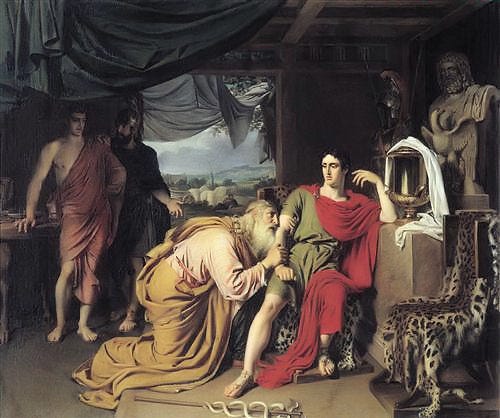
In the Iliad, there is a scene where the King of Troy, Priam, comes secretly to Achilles’ tent to ask for the body of his son, Hector. Although they are in the middle of a war, and each has lost beloved friends and relatives because of the other, Achilles welcomes Priam as his guest, treats him to food and drink and a bed for the night, after they weep together over their losses. In the Odyssey, Odysseus’s travels create numerous examples of proper behavior by some of his hosts and by him as guest, just as the suitors occupying his palace are the poster children for bad guest behavior.
Why would Homer – an itinerant musician – choose to sing epic tales that put the importance of hospitality front and center? I am pretty sure that life wasn’t always easy for Homer, traveling from gig to gig, perhaps sometimes getting a bit seasick from the choppy waves buffeting the monoremes, and wondering whether audiences and local authorities would welcome him warmly at the next port. It helped to point to Zeus’s rules if you were depending upon them as a visitor.
Recently, I depended on the hospitality of friends in Jacksonville, Florida for four lovely days as their houseguest. My friends, Maya and Murillo, were so attentive, thoughtful and generous that I know Zeus was pleased. And Maya is an amazing cook. I even proposed that they consider adopting me (both of my parents are deceased, so I qualify as an orphan), but unfortunately, they weren’t willing to take hospitality that far (I think they worried that there might not be enough room for all the musical instruments).
Hospitality from strangers can be even more delightful because it is more unexpected in today’s world (for a humorous exploration of the differences between standards of propriety in Odysseus’s Ithaca and the modern world, listen to Ithaka from our album, Songs from the Lost and Found, a translation of which appears below). On my recent drive across country, I made a point of visiting a café at an exit from I-70 in Cambridge City, Indiana (just East of Indianapolis). I had heard about the Greek doughnuts (loukoumades) and delicious coffee at Café Neo (which has a double meaning – in Greek kafeneo means café, but the name in English also signifies a novel twist). I rolled in and was greeted by the proprietor, Elias Alafogianis, working alone to juggle several walk-ins like me and a line of customers from the drive-in window. It is a busy place, but Elias is a model of smiling equanimity, patience and charm. He makes everyone feel welcome, and loves to talk about his commitment to quality ingredients and careful preparation (the coffee is a proprietary mix – it alone is worth the stop if you are heading across country). As I headed West, full of loukoumades, I thought that it’s the little things that matter so much. Or maybe, good manners isn’t a little thing at all. Just ask Zeus.
Ithaca by Fanis Tsoulouhas (English Translation)
We went out on the path to Ithaca
following the rising smoke
Looking for the Palace, the Land, the Journey.
We found Penelope in a promiscuous position.
She was petrified in a lustful embrace
with the suitors.
We found no ruins.
We found nothing.
How can you reach Ithaca
when your soul is full of
Laistrygonians and Cyclopses?






.avif)
.png)

.png)


.png)


.png)


.jpg)
